
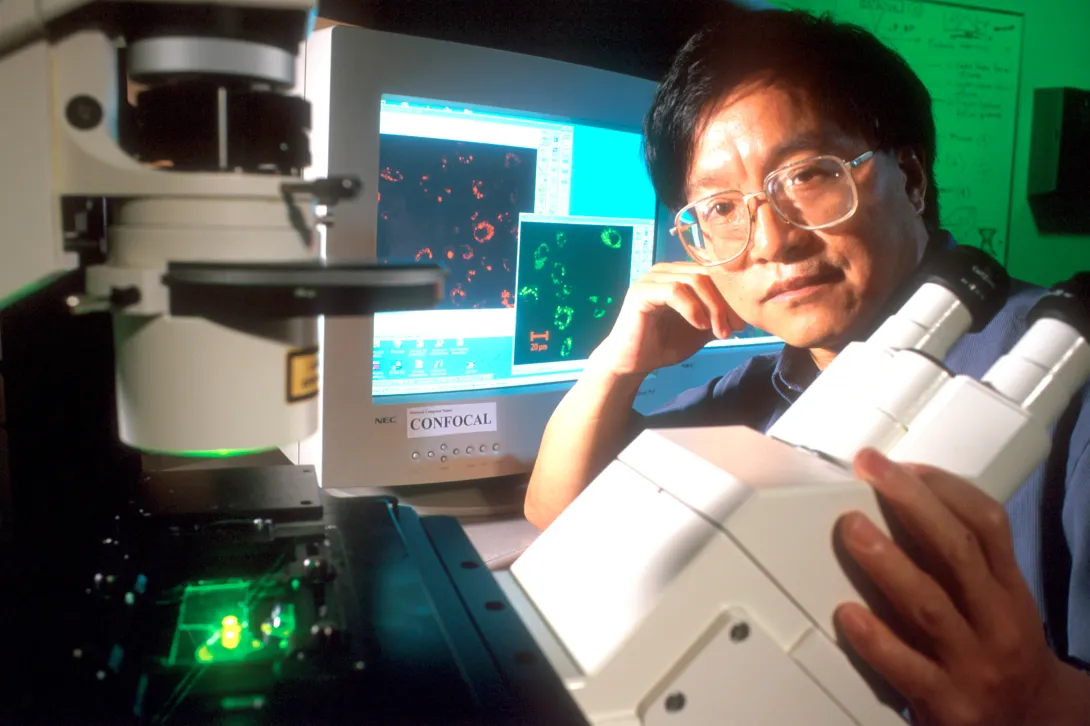
Physicians and engineerswithin a new center devoted to pediatric nanomedicine will develop targeted,molecular-sized nanoparticles as part of a unique approach to treatingpediatric diseases. Specific focus areas will include pediatric heart diseaseand thrombosis, infectious diseases, cancer, sickle cell disease and cysticfibrosis.
The Center for PediatricNanomedicine (CPN) is the first of its kind in the world.
Directed by Gang Bao, thecenter will involve researchers from Emory University, the Georgia Institute ofTechnology and Children’s Healthcare of Atlanta.
“Because nano-scalestructures are compatible in size to biomolecules, nanomedicine providesunprecedented opportunities for achieving better control of biologicalprocesses and drastic improvements in disease detection, therapy andprevention,” says Bao, the Robert A. Milton Professor of Biomedical Engineeringin the Wallace H. Coulter Department of Biomedical Engineering at Georgia Techand Emory University.
Nanomedicine involves thedevelopment of engineered nanoscale structures and devices for betterdiagnostics and highly specific medical interventions to treat diseases andrepair damaged tissues. One nanometer is one-billionth of a meter.
The CPN is part of theEmory-Children’s Pediatric Research Center led by the two institutions,including partnerships with Georgia Institute of Technology and Morehouse Schoolof Medicine.
With the leadership of Dr. PaulSpearman, Children’s chief research officer and vice chair for research in theEmory University Department of Pediatrics, 14 key priority centers have beenidentified. These are hematology and oncology; immunology and vaccines;transplant immunology and immune therapeutics; pediatric healthcare technologyinnovation; cystic fibrosis; developmental lung biology; endothelial biology;cardiovascular biology; drug discovery; autism; neurosciences; nanomedicine; outcomesresearch and public health; and clinical and translational research.
Emory and Georgia Techalready have had significant and successful research partnerships innanomedicine funded by the National Institutes of Health. These have includednanotechnology center of excellence for the detection and treatment ofcardiovascular disease, the development of personalized and predictiveoncology, and the development of engineered protein machines for treatingsingle-gene disorders.
“Nanotechnology can beapplied to many diseases, and the application of nanotechnology could have aprofound impact on improving children’s health,” says Bao.
Current centers located inthe joint Georgia Tech-Emory biomedical engineering department include theCenter for Translational Cardiovascular Nanomedicine (funded by a $14.6million, five-year grant from NHLBI/NIH) and the Nanomedicine Center forNucleoprotein Machines (funded by a $16.1 million, five-year grant from NIH).
The discoveries made inthese centers also will be applied to research in pediatric diseases. Forexample, scientists in the center for nucleoprotein machines are focused ondeveloping a technology to correct single-gene defects that lead to humandisease. They hope to use this approach to treat and eventually cure sicklecell disease, first focusing on curing a mouse model of sickle cell. The newtechnology would then be applied to human sickle cell patients.
“Nanomedicine is expected todramatically exceed what has occurred in the field thus far, and our belief isthat it will revolutionize medicine,” says Bao. “We plan to make this newpediatric nanomedicine center a leader in applying these unique discoveries totreating and curing children’s diseases.”
The biomedical engineeringfaculty members who are involved in the CPN activities include: Dr. WilburLam, biomedical engineer; Barbara Boyan, professor and Price Gilbert Jr. Chairin Tissue Engineering and associate dean for research; Niren Murthy, associateprofessor of biomedical engineering; Michael Davis, assistant professor ofbiomedical engineering; Phil Santangelo, assistant professor of biomedicalengineering; Shuming Nie, professor and the Wallace H. Coulter DistinguishedFaculty Chair in Biomedical Engineering; Thomas Barker, assistant professor ofbiomedical engineering; and Ravi Bellamkonda, professor and associate vicepresident for research.
News Contact
Georgia Tech Media Relations
Laura Diamond
laura.diamond@comm.gatech.edu
404-894-6016
Jason Maderer
maderer@gatech.edu
404-660-2926